


Understanding Its Role in Emotional and Social Development
Play is more than fun and games. For children and youth, play is a biological instinct and a psychological necessity that lays the foundation for healthy emotional and social development. From the early years through adolescence, play shapes how children interact with others, express emotions, and build resilience in the face of challenges. Understanding the psychology of play helps parents, educators, and community leaders create environments where children can thrive physically, emotionally, and socially.
In Canada, organizations, researchers, and public health advocates have emphasized that play is a fundamental right of childhood and a key driver of holistic development. This article explores the science behind play, its psychological benefits, and how structured and unstructured play experiences foster emotional and social growth. We also highlight Canadian perspectives and conclude with how Rising Stars’ Play programs support children’s development through play-based learning and engagement.
What Is Play and Why It Matters
Play is often described as children’s “work.” It is voluntary, joyful, and driven by intrinsic motivation. Play allows children to experiment, take risks, imagine, negotiate, and build relationships in ways that structured instruction cannot replicate. Whether running freely on a playground, inventing games with peers, or engaging in role-play, children are learning essential emotional and social skills through play.
According to the Canadian Public Health Association, play is embedded in Article 31 of the United Nations Convention on the Rights of the Child, which affirms that children have the right to leisure, recreation, and play. Play is crucial to mental and emotional health and can reduce experiences of depression, anxiety, aggression, and sleep problems. It enhances physical, cognitive, and social health, equipping youth with vital life skills they will use into adulthood. Canadian Public Health Association
The Psychology of Play: Emotional Development
Emotional Regulation and Expression
Play provides a natural arena where children express and regulate emotions. During unstructured play, children experience a range of feelings—joy, frustration, excitement, fear, and pride. These experiences become opportunities to understand and manage emotional responses in safe contexts. Studies show that play helps children develop emotional control and flexibility, essential components of resilience. National Institute for Play
Psychologists emphasize that emotional expression during play allows children to explore internal states in observable ways. Through role-play and imaginative scenarios, children give voice to feelings that may otherwise be difficult to articulate. These playful contexts provide critical rehearsal for coping with complex emotional situations as they grow older. Canadian Public Health Association
Play as a Stress Buffer
Play acts as a buffer against stress by activating joy, relaxation, and engagement. Research indicates that physically active play reduces anxiety and depressive symptoms while promoting a positive self-concept. Children who play regularly show improvements in mood and self-confidence compared to peers with limited play opportunities. Canadian Public Health Association
Play allows children to process difficult emotions indirectly. When children are facing stressors at school or in relationships, play can act as a natural release valve that fosters self-soothing and emotional regulation. This psychological benefit carries forward into adolescence and adulthood, helping individuals navigate complex social dynamics with greater ease.
The Social Psychology of Play
Play Builds Social Skills
Interaction with peers through play is a primary context in which children learn social norms, cooperation, and conflict resolution. Play situations involve negotiation, collaboration, turn-taking, and perspective-taking, all foundational social skills. Research on play demonstrates that children strengthen empathy and social understanding by interacting with others in playful environments. Canadian Public Health Association
Canadian research on play among children confirms its essential role in social development. A recent article in the Canadian Journal of Family and Youth highlighted how play fosters creativity, social interaction, and cooperative behaviour. Play allows children to explore their physical abilities and expand their social competence as they grow and learn from peers. University of Alberta Journals
Cooperative Problem Solving
In many play scenarios, children encounter challenges that require joint problem-solving. Whether negotiating game rules, figuring out roles in pretend play, or resolving a dispute over turns, children learn how to communicate effectively, listen to others, and find common ground. These interactions enhance social intelligence and equip youth with skills necessary for healthy relationships throughout life.
Risky Play and Adaptation
Risky play, characterized by thrilling activities with an element of uncertainty like climbing or exploring new terrains, is another dimension of social and emotional learning. According to the Sport Information Resource Centre (SIRC), risky play helps children adapt to their environment, build confidence, and manage fear. It encourages children to test limits, evaluate potential dangers, and develop self-assurance in their decision-making. SIRC
While supervision and safety remain important, allowing children to engage in developmentally appropriate risk helps them learn resilience and self-reliance—psychological assets that extend well beyond childhood play.
Play and Cognitive-Emotional Synergy
Play is not only social and emotional; it is deeply cognitive. Imaginative play, games with rules, and exploratory activities engage children in critical thinking, planning, and creative problem-solving. Cognitive and emotional development are intertwined during play as children learn to manage impulses, consider others’ perspectives, and develop adaptive strategies.
Studies show that through play, children satisfy basic psychological needs tied to human happiness and mental health, autonomy, competence, and relatedness. Free play enhances adaptive behaviours and supports prosocial development, enriching children’s relationships and personal well-being. National Institute for Play
The Role of Play Across Ages
Early Childhood
In the early years, play shapes foundational emotional and social capacities. Dramatic play and social interaction allow toddlers and preschoolers to explore roles and rules, helping them understand social cues, empathy, and emotional self-regulation. Pretend play continues to be essential in this phase because it promotes expressive capabilities and strengthens bonds with caregivers and peers. Government of Newfoundland and Labrador
Canadian early childhood educators stress the importance of play in school readiness, noting that imagination, social negotiation, and emotional flexibility developed through play prepare children for classrooms and peer communities.
Middle Childhood
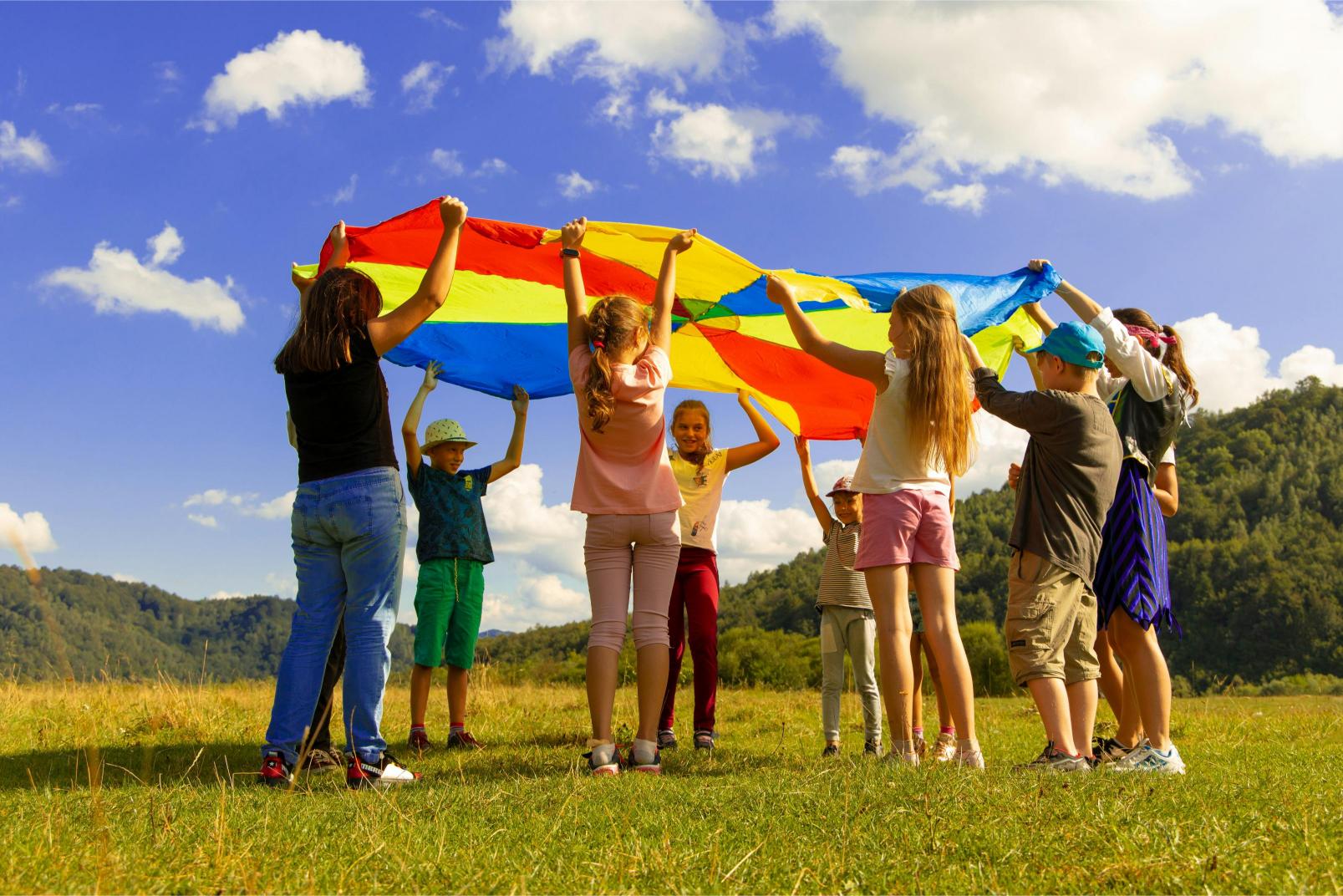
As children enter middle childhood, play becomes more structured but remains vital for social networks and emotional resilience. Team games, social play groups, and cooperative challenges support peer relationships and peer-based identity formation. Play in this stage helps children test social roles and build friendships that are essential for psychological well-being.
Adolescence
Though play often becomes less visible in adolescence, it continues to influence emotional health and social connection. Activities such as team sports, arts, role-play games, and adventure activities provide spaces for youth to express identity, manage stress, and create community. Facilitating play opportunities for older children and teens supports continued emotional growth and combats the isolation that can accompany adolescence.
Challenges to Play Today
Despite its clear benefits, playtime for children in Canada has declined. Parental perceptions show that outdoor play and unstructured time are shrinking, partially due to safety concerns, screen time, and highly structured schedules. A survey found that while many parents played outdoors daily in their own childhoods, their children spend significantly less time outside. Canadian Public Health Association
Reduced play opportunities can limit children’s development of emotional regulation, social skills, and adaptability. Experts emphasize that educators, parents, and community planners must intentionally create environments that support both structured and unstructured play across childhood and adolescence.
Canadian Initiatives Supporting Play
Right To Play
Right To Play is a Toronto-based non-profit using play to empower vulnerable children around the world. While its programs extend globally, its existence highlights a deeply Canadian commitment to play as a mechanism for children’s health, well-being, and empowerment. The organization’s focus includes children’s health and well-being, education, and girls’ empowerment, all linked through play-based activities. Wikipedia
Public Health Advocacy
The Canadian Public Health Association (CPHA) promotes play as critical to emotional and social development, offering resources that encourage communities to prioritize play opportunities for children and youth across Canada. Canadian Public Health Association
These national perspectives confirm that play is not a luxury but a public health priority that nurtures emotional resilience, social competence, and community engagement.
How Parents and Educators Can Champion Play
Create Space and Time
Ensure that children have daily opportunities for both free and guided play, whether outdoors, indoors, or with peers. Prioritize unstructured play without performance pressures or adult direction.
Encourage Playful Exploration
Support activities that foster curiosity, imagination, and social interaction. Allow children to invent games, take safe risks, and negotiate rules with friends.
Balance Screens and Play
Limit passive screen time and integrate digital activities that promote active engagement, storytelling, and social connection. Reinforce that physical and imaginative play enrich emotional and social development in ways screens alone cannot match.
The Power of Play and How Rising Stars Supports Children’s Growth
At Rising Stars, we believe in the power of play to transform children’s emotional intelligence, social skills, and overall well-being. Their Play programs are designed around research-informed, evidence-based activities that nurture physical literacy, social development, and foundational life skills while ensuring play remains joyful and child-centered. Programs such as Play & Learn Workshops, Camp PLAY, and tailored school-based play initiatives help children build empathy, emotional regulation, confidence, and cooperation through active and engaging play experiences. The Rising Stars approach recognizes that play is not just a childhood pastime but a psychological and developmental cornerstone that supports healthy emotional and social growth for youth across Canada.
References:
- Canadian Public Health Association: play and child development. Canadian Public Health Association
- Parental perceptions of play in Canada. Canadian Public Health Association
- Canadian research on play and youth development. University of Alberta Journals
- Importance of risky play for development (SIRC). SIRC
- Rising Stars Play programs. Rising Stars
- Right To Play – Canadian NGO. Wikipedia